


Research
More pages in this section
Research
Welcome to the NQRTH research hub
Discover research opportunities to help advance your medical career and contribute to better health outcomes across regional, rural, and remote northern Queensland.
This hub is designed for medical students and junior doctors who want to understand how research can fit into their medical education, clinical training, and career development. Engaging in research sharpens clinical reasoning, strengthens evidence-based practice, and enhances communication skills—core competencies for high-quality patient care.
Through bursaries, mentorship, collaborative projects, and postgraduate pathways, the NQRTH Research Hub connects you with opportunities that make a real impact. Many of these initiatives focus on improving health outcomes in the very communities where you live, learn, and work.
Ready to grow your clinical skills and contribute to rural health?
Start exploring, get involved, and be part of the change.
Med NORRTH Conference
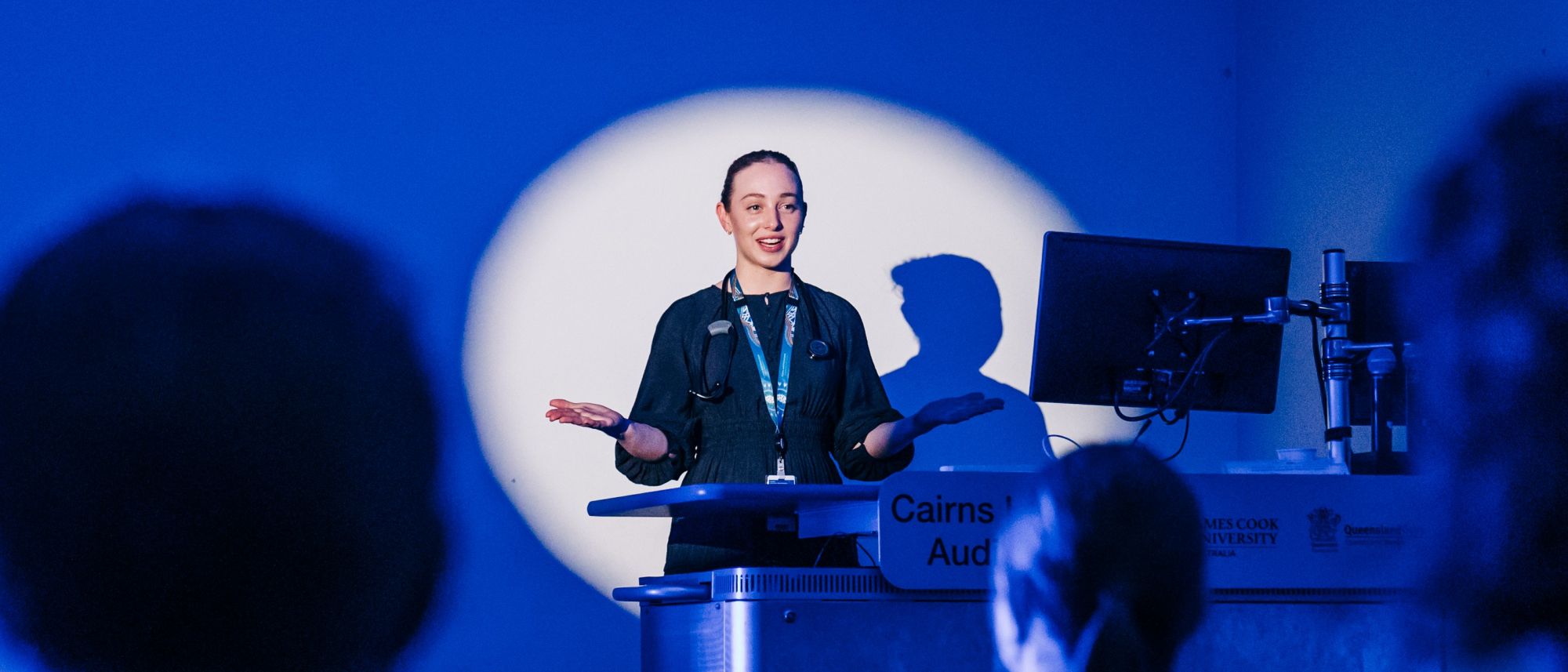
MED NORRTH (Northern Outcomes in Regional Research, Translation, and Health) offers medical students, junior doctors and local and national medical and health researchers an opportunity to showcase their evidence-based research, build connections and learn more about research in northern Queensland.
Research news and stories
-
23rd September 2025
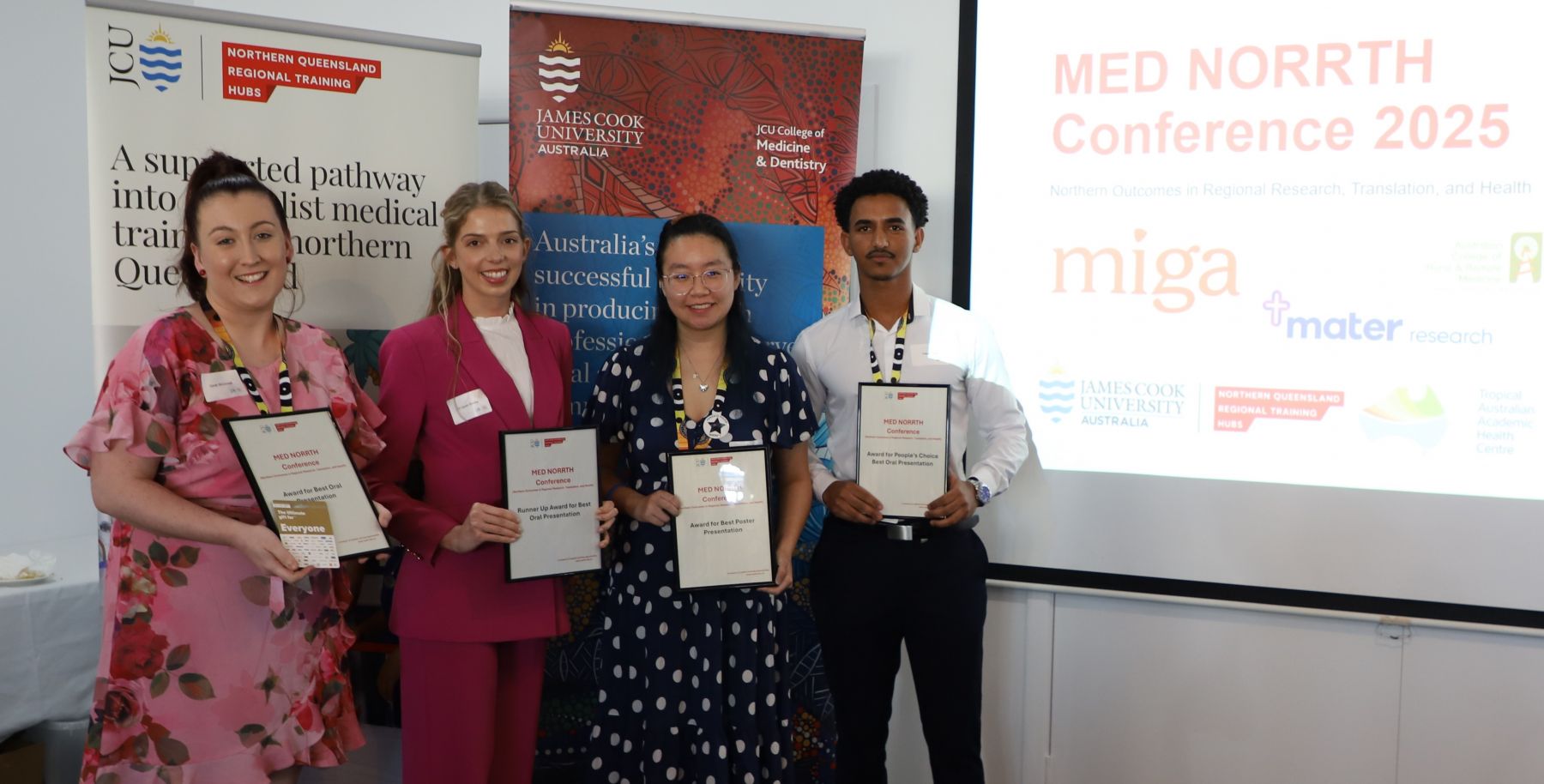
Celebrating the success of the inaugural MED NORRTH conference
On 16 August, the inaugural MED NORRTH (Northern Outcomes in Regional Research, Translation, and Health) conference convened at the Townsville Yacht Club, bringing together medical students, junior doctors and early-career researchers from across northern Australia. Hosted by NQRTH in partnership with JCU’s College of Medicine and Dentistry and the Tropical Australian Academic Health Centre (TAAHC), the event provided a focused forum for presenting new findings, exchanging ideas and building research capability. Guided by the theme “Building Research Skills to Advance Regional Health in Australia,” the program highlighted practical, evidence-based approaches to improving health outcomes in regional, rural and remote communities. Through oral and poster presentations, panel discussions and structured networking, participants engaged with peers and mentors, strengthened professional connections and showcased the breadth and excellence of emerging research in the North. Medicine Impact Research Advisor Susan Wright said the event showcased a diverse range of research topics, including telehealth, medical education, and clinical outcomes. “Events such as MED NORRTH foster meaningful networking opportunities, helping attendees build connections and potential collaborations with peers, mentors, and experienced researchers,” Ms Wright said. “This exposure strengthens research confidence and enhances career development by boosting CVs and research profiles which are key assets for many specialist training pathways.”
Read More -
23rd September 2025
Exploring Big Questions: JCU Medicine Student Anna Duan
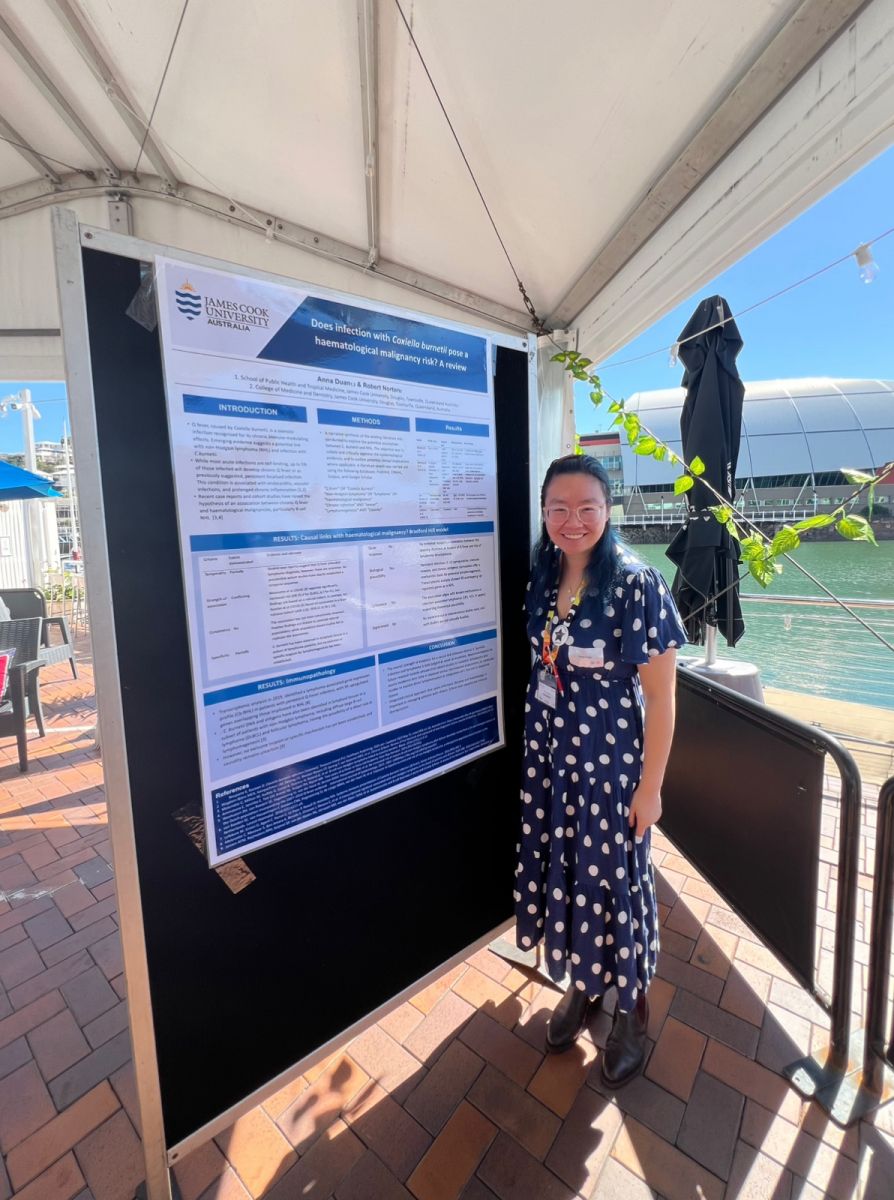
James Cook University fifth year Medicine student Anna Duan has a passion for medical research, she believes it’s what keeps medicine alive. “Without it, we’d just be repeating yesterday’s successes and not really be prepared for tomorrow’s challenges,” Anna says. Herself an eager researcher, Anna currently has three research projects underway and recently presented at the inaugural MED NORRTH Conference, joining a gathering of medical students, junior doctors, and early career researchers from across northern Australia to showcase medical research. The event—hosted by NQRTH, JCU’s College of Medicine and Dentistry, and the Tropical Australian Academic Health Centre (TAAHC)—was designed to share ideas, strengthen research skills, and build connections across the North. And Anna says it did just that, and more: “It created space to learn about research in our own region, to hear about methods and approaches that aren’t always taught in textbooks, and to see how questions can be tackled from different disciplines. The panel discussions were thoughtful, and the networking opportunities were invaluable. It also reminded me that research isn’t solitary, it’s something we do together. "I’d love to see more of these events in the future.” Anna’s work stood out at MED NORRTH. She was awarded Best Poster at the event, adding another achievement to her growing list of academic achievements. Her poster project, supervised by Professor Robert Norton, explored whether there might be links between Q fever — a common zoonotic infection in Far North Queensland — and blood cancers. Anna’s current research projects span infectious diseases and public health. “One of my projects, under Emeritus Professor Maxine Whittaker, has been about speaking with doctors, vets, and environmental health workers, to understand how we can apply a ‘One Health’ approach to controlling soil-transmitted worms in humans,” she says. “These parasites affect millions worldwide, and One Health is about finding solutions through collaborative approaches between human, animal and environmental sectors.” She’s also been working with A/Professor Richard Bradbury’s team on diagnostics, comparing a commercial Polymerase Chain Reaction (PCR) test with microscopy to ascertain how accurate and effective they are. Anna says she’s passionate about researching infectious diseases because they highlight global inequities. “I think my love for infectious diseases comes from how honest they are. A virus, a bacterium, a parasite – they don’t discriminate. They follow the rules of biology, yet they reveal the deep inequalities of our world,” she says. “That paradox – where something as small as a worm can shape the destiny of a child, a family, or even a country – is why I am passionate.”
Read More -
17th September 2025
How research opens doors for JCU med students and doctors
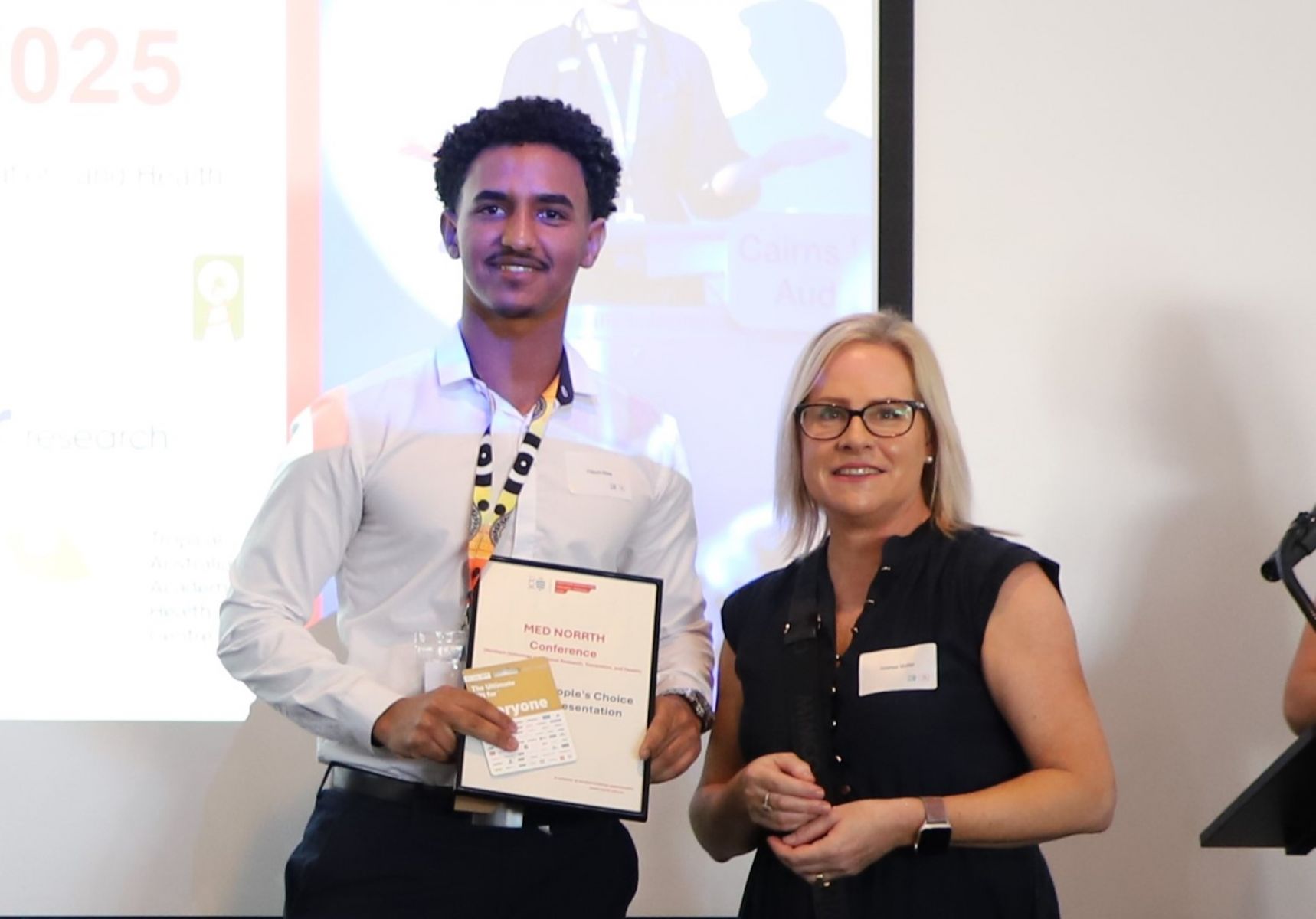
When second-year medical student Fitsum Abay stepped into the Australian Institute of Tropical Health and Medicine (AITHM) laboratory for the first time, he wasn’t just ticking a box, he was testing a future. “I knew about the work happening at AITHM and was curious to see what research was really like, so the bursary felt like a great opportunity to get involved,” he says. “It gave me a chance to step into the lab, challenge myself, and learn from experienced researchers.” That decision led him to a project with big possibilities and deep local roots: Aboriginal Bush Medicine as a Source of Anti-Inflammatory Agents. Guided by Associate Professor Phurpa Wangchuk and supported by Dr Shatarupa Das, Fitsum helped test how compounds drawn from traditional remedies affected human immune cells. “The most eye-opening aspect for me was seeing how much interdisciplinary collaboration was involved, with botanists, immunologists, chemists, and community leaders all working together towards a shared goal,” he says. Turning curiosity into capability Through the Northern Queensland Regional Training Hubs (NQRTH) MBBS Summer Research Bursary Program, Fitsum built a toolkit that will serve him on the ward as much as it does at the bench. “I gained hands-on experience in basic lab techniques, immunology, and science communication, which gave me a strong introduction to research,” he says. “Working closely with incredible mentors such as Dr Rupa (Dr Shatarupa Das) allowed me to discover my interest in laboratory work and encouraged me to keep research as part of my career journey in medicine.” That blend of mentorship and method paid off on stage, too. Presenting at the recent MED NORRTH, a research conference hosted by NQRTH, JCU’s College of Medicine and Dentistry, and the Tropical Australian Academic Health Centre (TAAHC), was, at first, daunting. “Presenting at MED NORRTH was nerve-racking at first, especially presenting alongside people far more qualified than me, but it turned out to be a really positive experience,” Fitsum says. “Everyone was supportive, and there was such a wide range of interesting projects being shared. Winning the People’s Choice Award was very encouraging and being recognised by people you admire was empowering.”
Read More -
7th August 2025
How research opportunities at JCU shape the next generation of medical professionals
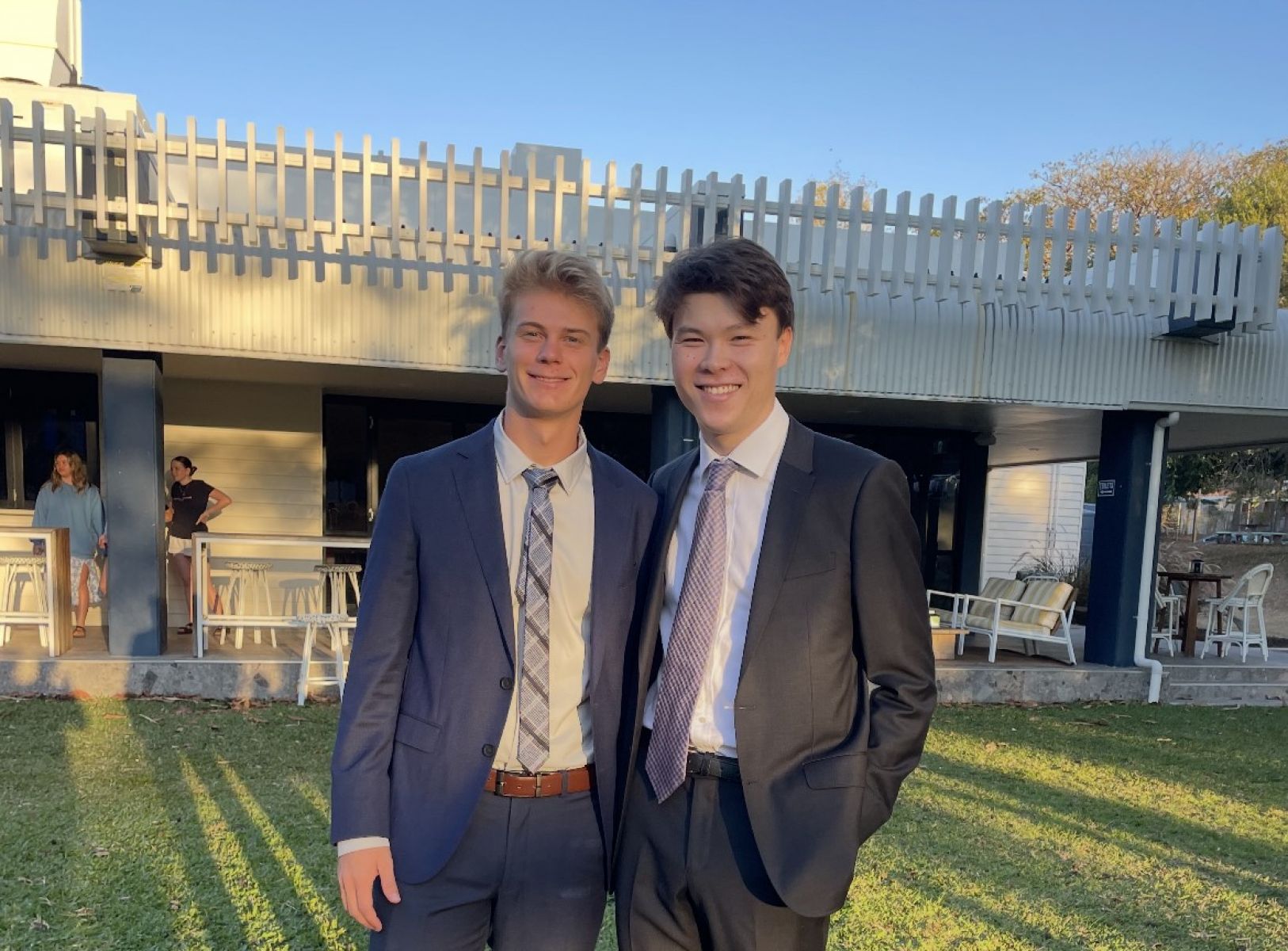
When fourth-year JCU medical students Timothy Noack and Oliver Ma step up to present their first systematic review at the upcoming inaugural MED NORRTH (Northern Outcomes in Regional Research, Translation and Health) conference, they’ll be doing more than showcasing a research project — they’ll be stepping into a professional future shaped by curiosity, collaboration and a deep commitment to improving healthcare in regional Australia. Held in Townsville and hosted by Northern Queensland Regional Training Hubs (NQRTH), the College of Medicine and Dentistry and the Tropical Australian Academic Health Centre (TAAHC), MED NORRTH offers a vital platform for medical students, junior doctors and early career health researchers to build research skills, exchange ideas and foster connections across the north. For Professor Sarah Larkins, Dean of the College of Medicine and Dentistry, events like MED NORRTH are not only a celebration of academic inquiry — they’re a launchpad for impactful careers. “It’s fantastic for junior doctors and senior medical students to have an opportunity to present their research in front of supportive peers,” she said. “It can sometimes be a little intimidating when you're just starting off in research, presenting at conferences, and this is an excellent opportunity for staff to hear about some of the great work that's going on, and students and junior clinicians to hear about some of the research that other people in the system are doing.” Research Grounded in Real-World Challenges What sets JCU’s medical research apart is its connection to local communities and regional health needs. Professor Larkins said many students and junior doctors are drawn to research that addresses real problems they see on the ground. “A lot of local medical students and junior doctors get interested in doing small, clinically relevant research projects that respond to local need,” she said. They see a problem in the system, they see a health concern that's not being responded to, and they get involved in research to fix it. So, it’s research with a real contemporary translational impact,” she said. Medicine Impact Research Advisor Susan Wright agrees. She said early exposure to research develops a broad range of competencies that strengthen clinical reasoning and communication — skills that will serve students well throughout their careers. “Building research skills early in their medical education and training journey allows medical students and junior doctors to develop a broad range of competencies that are essential for future clinical practice,” Ms Wright said. “This includes the ability to critically evaluate evidence, deepen their understanding of clinical care, and gain experience in data analysis, scientific communication, and evidence-based medicine. “Early exposure to research fosters curiosity and confidence, encouraging a proactive approach to learning and innovation. Importantly, engaging in research within regional and rural contexts enables emerging clinicians to contribute meaningfully to medical research and work to towards improving health outcomes.”
Read More -

11th November 2024
Inspiring medical students and junior doctors to dive into research
Professor Andrew Mallett, a trailblazer in the field of kidney genetics, has been awarded the prestigious Researcher of the Year Award by the Townsville Hospital and Health Service, recognising his remarkable contributions to advancing medical knowledge and improving patient outcomes. The Bowen-raised nephrologist was the first James Cook University graduate to be appointed Professor of Medicine and leads the largest renal genetics clinical service and program in Australia. While Prof Mallett’s work in research has changed lives, he remains humble, attributing much of his success to the mentors and colleagues who have supported him along the way. He also stresses that research is not just about personal achievement, but about making a meaningful difference. "Our passion to do research comes from a desire to share our love of our chosen subjects," Prof Mallett says. "Research enables you to make different and better relationships, both with your patients, but also with your colleagues, and it broadens your horizons."
Read More -

9th May 2022
North Queensland: A Paradise in Medical Research
With a whole new level of responsibility, and a lot still to learn, the working life of a junior doctor can be full-on. If you aren’t currently involved in research, the prospect of adding such an undertaking to an already busy schedule can be daunting. But it doesn’t have to be. As medical students and junior doctors alike are discovering for themselves, northern Queensland is a paradise in medical research. Complementing your hands-on training experiences, you can grow as a doctor by conducting research aimed at improving the health outcomes of our regional, rural, remote, and Aboriginal and Torres Strait Islander communities. Right across our region, there are opportunities to get involved in a diverse range of translational, high impact research initiatives with James Cook University (JCU), Hospital and Health Services, and institutes including AITHM and TAAHC. By helping improve lives through research in northern Queensland, you can also shape your training pathway and career in medicine. Here’s how: 1. Research in NQ offers opportunities to investigate unique health issues affecting the Tropics Northern Queensland is a region of varying landscapes and demographics, and with this comes a range of health issues affecting our communities. There are a number of diseases and other health issues that occur uniquely, are more widespread or prove more difficult to control in Tropical and subtropical regions like northern Queensland. Cardiologist Dr Anthony Brazzale and the Cairns & Hinterland Hospital & Health Service (CHHHS) Cardiac Unit are currently conducting research into the outcomes of Patent Foramen Ovale Closure (PFO) procedures on scuba divers with a hole in their hearts. Dr Brazzale says this type of project presents an excellent opportunity for junior doctors. “Here in Cairns, we’re probably doing the most PFO closures in the country. We have a unique area up here in the Tropics, and we have a lot of divers here, so it provides these unique opportunities. “Junior doctors are collecting data and we help them with the write-up. From medical students to advanced trainees, there are all levels of training involved in research with our unit. If you show the initiative and you’re motivated, as consultants we will always look to support you,” Dr Brazzale says. Making the process easier for clinicians to get involved in research is the Tropical Australian Academic Health Centre (TAAHC). The centre is a collaboration between northern Queensland’s five Hospital and Health Services, the Northern Queensland Primary Health Network (NQPHN), JCU and AITHM. Through an emphasis on translational research, the TAAHC partnership is designed to enhance collective capability in health service delivery, health and medical research and workforce development. The centre also offers funding schemes for clinicians and clinicians, from micro-funding to major Fellowship scheme. Find out more about how TAAHC is funding research in northern Queensland. 2. Research in NQ can help your medical specialty training application stand out The application process for medical specialty training can be extremely competitive. Some colleges accept just a handful of trainees each intake. Seeking out research opportunities as a medical student or junior doctor can help open the door to your dream medical specialty. Dr Kate Swift is a junior doctor at CHHHS who can attest to what research involvement can do for your training pathway prospects. With the support of senior clinicians and academics from JCU, she has been investigating the incidence rates of appendicitis in Far North Queensland. “JCU and Prof Alan de Costa have been very supportive these last two years. The research project has actually facilitated my entry into the training program. Dr Swift was the first author of the research publication published in the ANZ Journal of Surgery in December last year. She commenced general surgery specialty training at CHHHS in January 2022. Dr Brazzale echoes the sentiments of the benefit of research in your application process. “Research can help you in the application process because it demonstrates initiative. You don’t have to do an independent study that gets published in the Lancet, you just need to get involved. It could be an audit or poster presentation at a national meeting,” Dr Brazzale says. 3. Research in NQ can connect you with leading clinicians and researchers Right across northern Queensland, there are senior doctors and researchers with decades of experience who can guide junior doctors in their training and research endeavours. Townsville University Hospital junior doctor Tejas Singh has published more than 30 peer-reviewed research articles aimed at improving the management and outcomes for patients with vascular diseases. Dr Singh has conducted his award-winning PhD research under the mentorship of Professor Jonathan Golledge, an academic vascular surgeon and international leader in peripheral artery disease. Professor Golledge heads the Queensland Research Centre for Peripheral Vascular Disease (QRC-PVD), located at Townsville University Hospital (TUH) and JCU. “The support and research infrastructure available at QRC-PVD, JCU, have been instrumental in my PhD. “There’s ample opportunity to collaborate with other researchers nationally and internationally,” Dr Singh said of the Townsville-based PhD program. Dr Singh credits the Townsville University Hospital’s supportive environment and the breadth of clinical opportunities as two of the great advantages of training in Townsville. “As a junior doctor at Townsville University Hospital, you get more hands-on experience and opportunities to develop clinical independence in comparison to metropolitan hospitals,” he said. 4. Research in NQ is well supported Respected institutions like JCU and AITHM are dedicated to northern Queensland and provide opportunities for students and doctors who want to help make a difference in the health of our regions. Australian Institute of Tropical Health and Medicine (AITHM) is Australia’s only dedicated health and tropical medicine research institute. Based at JCU, AITHM focuses on diseases of high burden in the tropics, tropical health security and strengthening health systems. ATHM has research facilities in Cairns, Townsville, Thursday Island and Mackay. One way you can pursue research as a clinician is through the JCU AITHM Cohort Doctoral Studies Program. One of the first of its kind in Australia, the Cohort Program offered clinicians like Townsville-based medical oncologist Dr Sabe Sabesan the support, resources, and networking opportunities to conduct postgraduate research. “The launch of the Cohort Program was really good timing,” Dr Sabesan says. “It enabled us to examine our model of care while using research as a mechanism to develop the evidence base to demonstrate our impact.” “The Cohort Program gave us a methodology and a proven framework. The PhD process also strengthened different writing skills for me, which has led to writing policy for the state government. “From this project, you can see the legacy impact of clinician-led innovations on the broader health system and the broader communities.” Across the regions that NQRTH works in, there are a number of other leading research institutes: Mackay Institute of Research and Innovation(MIRI) facilitates research and drives innovation for the delivery of evidence and value-based, patient-centred care across Mackay Health and Hospital Service. MIRI supports clinical trials and is active in the new TeleTrial concept involving regional and rural hospitals and health services in northern Queensland. Murtupuni Centre for Rural & Remote Health(MCRRH) aims to build a healthy community and a skilled workforce in and for rural and remote Queensland through education and research. It is the foundation University Department of Rural Health in Queensland and spans more than half of Queensland, including the Central West. Townsville Institute of Health Research and Innovation(TIHRI), a purpose-built research facility at Townsville University Hospital, supports and translates research into innovative, high-quality patient care. Find Townsville HHS specialty research groups and contacts here
Read More -

17th November 2021
Junior doctor earns acclaim for vascular research
Townsville University Hospital junior doctor Tejas Singh has published more than 30 peer-reviewed research articles aimed at improving the management and outcomes for patients with vascular diseases. Dr Singh has conducted his award-winning PhD research under the mentorship of Professor Jonathan Golledge, an academic vascular surgeon and international leader in peripheral artery disease. Professor Golledge heads the Queensland Research Centre for Peripheral Vascular Disease (QRC-PVD), which is located at Townsville University Hospital (TUH) and James Cook University (JCU). “The support and research infrastructure available at QRC-PVD, JCU, have been instrumental in my PhD,” Dr Singh won a $5000 prize for best research paper at the Australian and New Zealand Society of Vascular Surgery conference. The study, ‘Association of Chronic Venous Disease with Major Adverse Cardiovascular Events’, shows that people with more severe venous disease are at higher risk of having a cardiovascular event such as a heart attack or stroke. He is part of a team investigating biomechanical engineering techniques to better predict abdominal aortic aneurysm (AAA) rupture, which is estimated to be responsible for 200,000 deaths a year worldwide. The research, published in the British Journal of Surgery and Journal of the American Heart Association, has earned him a spot as one of five finalists chosen to present at the Royal Australasian College of Surgeons Queensland state conference in competition for the Neville Davis Prize. “When an AAA grows up to a certain size, it has a higher risk of rupture and bleeding, potentially causing death,” Dr Singh says. “The current method of estimating the risk of rupture is by measuring the aortic diameter. This measurement is used to help decide when to perform surgical repair. However, some small AAAs will rupture before they reach the current threshold for repair and some large AAAs remain stable without repair. This suggests that diameter is an imperfect prognostic measure, so we're looking at using biomechanical engineering techniques, which can perhaps better predict the risk of rupture of aneurysms.” World-class program Dr Singh said Professor Golledge had been instrumental in his PhD. Professor Golledge, recently elected as a Fellow of the Australian Academy of Health and Medical Sciences in recognition of his exceptional contribution, leads a translational research program that is innovative in treatment approaches to vascular disease. “There’s ample opportunity to collaborate with other researchers nationally and internationally,” Dr Singh said of the Townsville-based PhD program. He said Townsville University Hospital’s supportive environment and the breadth of clinical opportunities were two of the great advantages of training in Townsville. “As a junior doctor at Townsville University Hospital, you get more hands-on experience and opportunities to develop clinical independence in comparison to metropolitan hospitals,” he said. Research that matters Dr Singh was awarded a $250,000 Queensland Government research fellowship and a total of $90,000 in Townsville Hospital and Health Service Study Education Research Trust Account (SERTA) Grants for his aneurysm study and another recently published investigation highlighting the in North Queensland and the need to reduce and prevent amputations. “It’s evident in literature that people with diabetes are at higher risk of having lower limb major amputations,“ Dr Singh says. “Our study compared the amputation rates between Aboriginal and Torres Strait Islander peoples and non-Indigenous people over 15 years.” “The findings were that Aboriginal and Torres Strait Islander peoples had a higher burden of major amputations secondary to diabetes. The other finding from that paper was that the burden of amputations in our region seems not to be reducing, in contrast to some of the other populations in Australia.” [feature-block] James Cook University is proud to support The Northern Queensland Regional Training Hubs program. We are a medical training network integrating private and public hospitals and health services, GP clinics and James Cook University. We collaborate to provide doctors in training with unique medical training opportunities from intern to fellowship in Northern Queensland while enjoying the lifestyle that only this part of Australia can offer. [/feature-block]
Read More


Research Collaboration and Partnerships
The NQRTH research team collaborates with key organisations and networks to expand research opportunities for medical students and junior doctors, foster research engagement, and improve healthcare outcomes across northern Queensland. These partnerships also enable joint research initiatives that address community needs and strengthen regional and rural health systems.
Contact the NQRTH research team


NQRTH is an initiative of the Australian Government's Integrated Rural Training Pipeline (IRTP) and is facilitated by James Cook University in partnership with public and private hospitals, Queensland Aboriginal and Islander Health Council (QAIHC), health services, Aboriginal Community Controlled Health Organisations (ACCHOs) and GP clinics.
Cairns region
(07) 4226 7138
Central West region
(07) 4764 1547
Mackay region
(07) 4885 7122
North West region
(07) 4764 1547
Torres and Cape region
(07) 4095 6103
Townsville region
(07) 4781 3424